Kayci Jones
4.1 SUMMARY
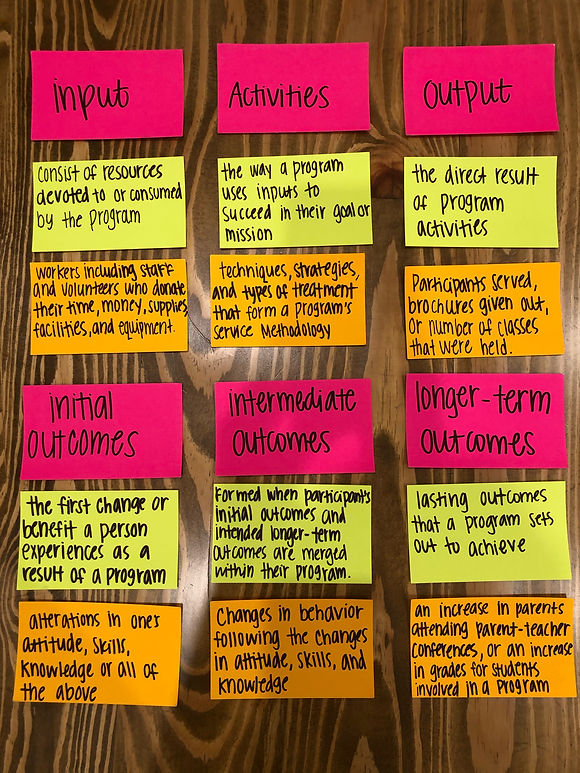
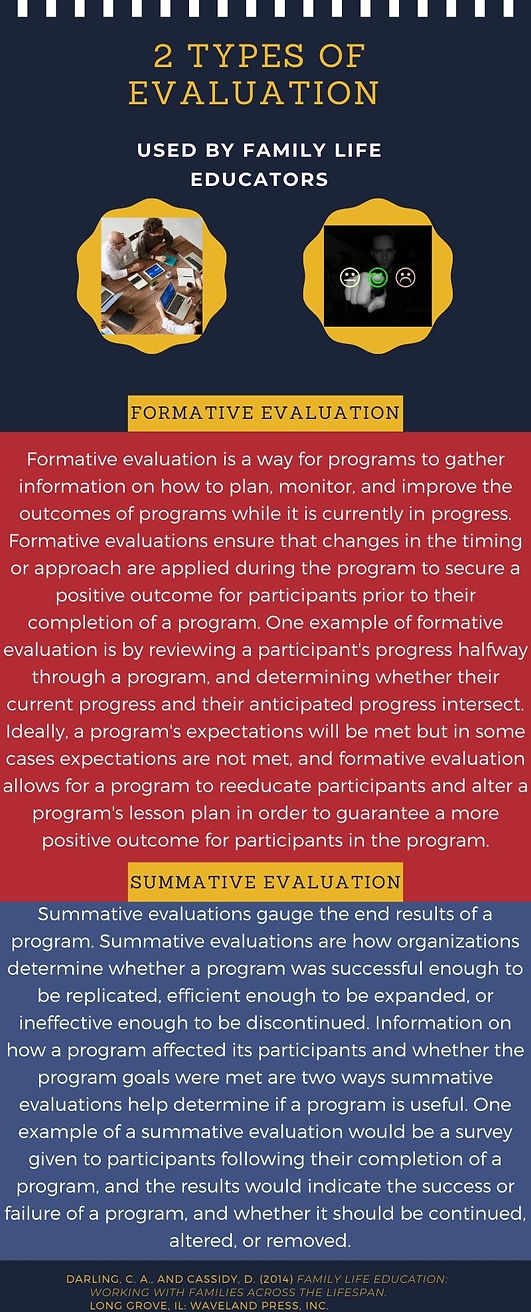
This week I learned about the two primary types of evaluation for family life educators. Formative evaluations are conducted with the intention of monitoring, planning, and improving programs. Formative evaluations recount a program and offer feedback how the program is doing while still in progress, usually resulting in changing the timing and approach mechanisms of that program. Summative evaluation involves the end result of a program. Usually summative evaluations are done following the completion of a program in order to decide whether a program should be duplicated, expanded, or sometimes stopped altogether. I also learned about a logic model and how it is used to evaluate programs. Inputs or resources used by programs, activities, and outputs or products of programs are used to determine initial or beginning outcomes, intermediate or joined outcomes, and longer-term or lasting outcomes of that program. Applying a logic model to evaluate programs can point out the ways intended goals can be met and connect activities to program outcomes. A Five-Tiered Approach to Program Evaluation is used by family life educators to guarantee a thorough evaluation of a program. Tiers 1-3 ensure accountability, clarity, and quality. Tiers 4 and 5 describe the process of interpreting data into new outcomes, applying data to advance research, strengthen a program, and prompt public policy in certain areas. I learned about evidence-based programs and how they ensure a program is based on adequate research and validated theories and increase the chances of outcomes being traced back to help received in the program. Evidence-informed programs are similar to evidence-based programs, however, while they are informed on the fundamentals of effective programs, they do not usually include the research and data that evidence-based programs include.
Darling, C. A., and Cassidy, D. (2014) Family Life Education: Working with
Families Across the Lifespan. Long Grove, IL: Waveland Press, INC.
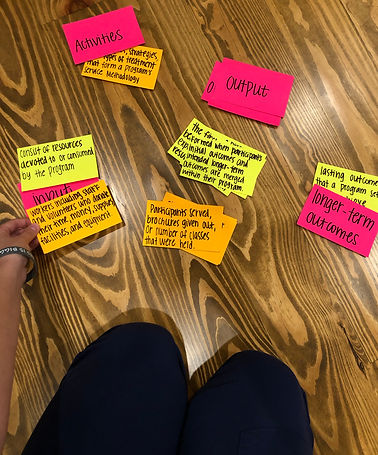
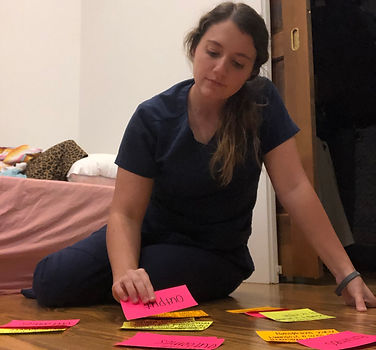
4.2 Logic Model Matching Game
.jpeg)
.jpeg)
Work Cited
Darling, C.A., and Cassidy, D. (2014) Family Life Education: Working with Families
Across the Lifespan. Long Grove, IL: Waveland
4.4 Types of Evaluation Infographic
.jpg)
4.7 Evaluation exploration
Option #1.
In order to improve teen engagement and group discussion in the Sexuality and Your Teen workshop I am teaching, I have created a survey for the teens involved in this workshop. The survey will be given to teens prior to the completion of the workshop. This plan will help me to get a better idea of each teen's level of knowledge on the subject of sex. By learning this, I will be able to separate them into groups specific groups. I am anticipating that the teens will be more likely to open up to others who have similar goals or experiences comes to sex. For example, after gathering the results of this survey, I will be able to form a group for teens who have had sexual relations before and encourage them to discuss their experience and thoughts on the matter, while I will form another group for teens who believe in sex before marriage which will hopefully encourage them to discus their beliefs and their plan on following through with that belief. I will keep the results of the survey anonymous, and separate the parents and teens during group discussions in the likelihood that teens will open up more when talking with peers instead of their parents. Discussing sex with their parents will be encouraged when the teens feel they are more comfortable discussing sex in general. Because this survey will be given prior to the completion of the workshop, this is an example of formative evaluation. Formative evaluation will help me identify why teens are disengaged during group discussions while the workshop is still in progress, and gives me information on the teens and how to help them while there is still time for them to learn something from this workshop. Below I have posted a link to the survey I have created for the teen participants.
https://www.surveymonkey.com/r/DPFHXQP
Option #2.
I completed a summative evaluation of the workshop Sexuality and Your Teen, which was done after it ended in order to decipher whether it was a success or failure, and whether the workshop should be continued or not. Following the completion of the workshop, I spoke with some of the parents who participated and it came to my attention that work obligations were a factor in the decreased attendance of participants. Another factor was finding a sitter for those with other children aside from their teen involved in the workshop. Some of the parents also informed me that the lack of material handed out to participants was a reason they found the workshop to be less than beneficial and did not feel the need to continue to attend. I believe I have come up with a few ways to rectify the problems that led to participants drop in attendance in order to continue to hold this workshop in the future, and make it more beneficial to participants. The first change I will do is collect helpful material such as pamphlets or articles that include information on the discussion at hand and give them out before each session. For instance, an article on ways to talk to your teen about sex would possibly help parents communicate with their teen at home and prepare them to play a more active role in the aspects of their child's knowledge on sex. This will be beneficial for both child and parent. I will also be more proactive when planning workshop sessions, such as holding them on weekends only or in the evening in order to accommodate parent's work schedule. Another improvement would be a daycare center at the same location of the workshop for siblings of teen participants for parents who are unable to find a sitter for their other children. I believe making these changes will greatly improve the attendance of future workshop participants.
LAB Challenge 4
